

This post was originally published on the Cleanview newsletter, which I also write. It is an excerpt from Cleanview’s recently published report about how Amazon is powering its data centers in the AI era. You can get the full report or a free preview here.
In the spring of 2024, Amazon began construction on what would soon become the world’s largest data center, located in New Carlisle, Indiana. Just 18 months later, the company declared the first buildings operational with roughly 500,000 of its Trainium2 chips running inside. Another 6 months later, the campus passed 1 GW.
No company had ever built so much compute so quickly. And Amazon did it without building any new power plants or high-voltage transmission lines.
With Amazon paying hundreds of millions of dollars to the local utility and little infrastructure investment required, the New Carlisle data center enabled the local utility to actually cut residential utility bills. Last month, Indiana Michigan Power announced that it was cutting rates by $100 per year for the typical household in its territory.
By using transmission lines and grid capacity built during the coal era, Amazon achieved a rare trifecta: It built 1 GW of compute in record time; it did so at a remarkably low cost; and its new demand on existing lines helped the local utility lower electricity rates for residents.
Amazon has been explicit that this is its preferred development model since it allows the company to build campuses “without triggering the long-lead multi-year inter- and intra-state transmission build out process.”
But in recent years, as demand for compute has exploded, it’s become harder for Amazon to identify data center sites where this is possible. Existing infrastructure only supports giga-scale data center development in so many places.
Everywhere else, Amazon needs someone to build new firm power generation. And in the AI era, that has meant one thing: new natural gas power plants.
Amazon’s growing gas portfolio
Last month, Cleanview broke the news that Amazon is planning to build a 7.65 GW natural gas power plant in West Texas to power a data center campus. In our latest report on Amazon’s power strategy, we identified seven more power plants linked to the company’s data centers.
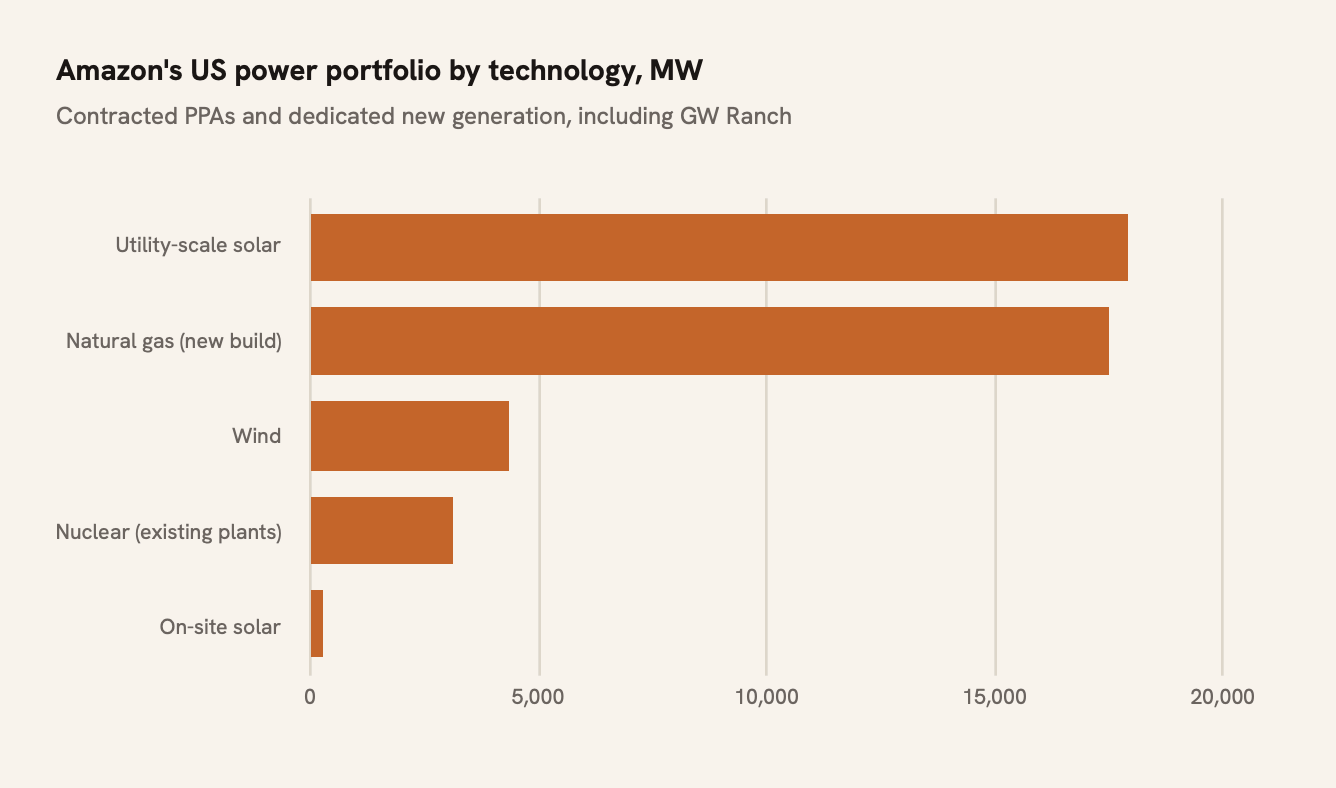
Altogether, utilities and independent power producers are building 17.5 GW of new gas generation to serve Amazon’s growing power needs. That’s roughly 1.5 times as much power as New York City consumes at its peak in a given year.
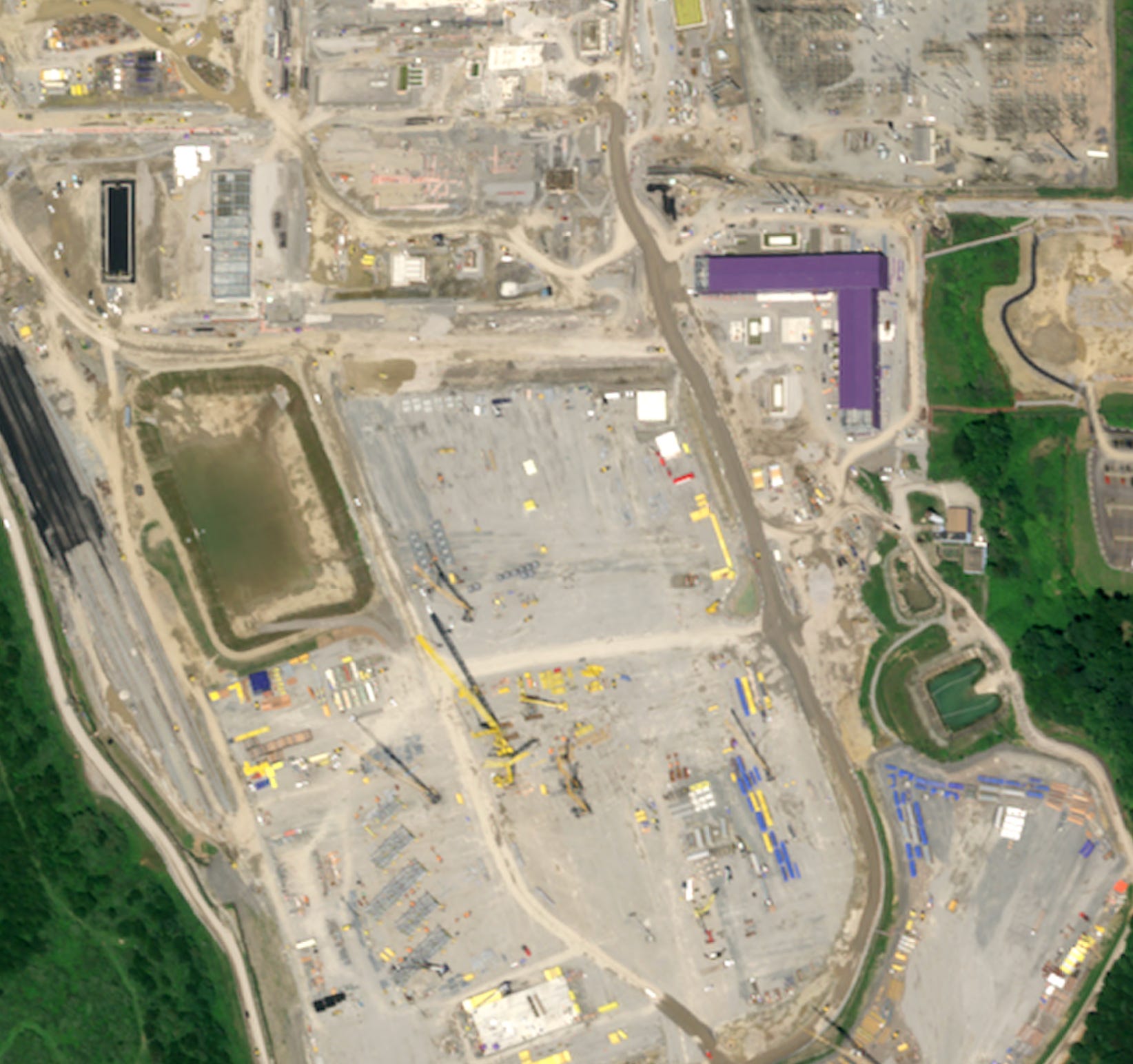
Earlier this month, Amazon filed plans for a 36 building campus in Pennsylvania that will be powered by the 4.5 GW Homer City natural gas power plant.
A group of developers proposed the Homer City natural gas power plant more than a year ago. It was one of the projects featured in our behind-the-meter data center report. In a series of press releases, the company announced that it had secured seven GE Vernova combined cycle turbines, gas pipeline deals, and EPC construction labor.
But there were reasons to be skeptical of the project: Mainly, it didn’t have a customer for the power. Amazon’s deal changes that.
Satellite images show that the gas power plant recently began construction. The developers have said they expect the first turbines to begin producing power in 2027.
How Amazon is powering its campuses in Mississippi
In January 2024, the Mississippi legislature convened for a special session dedicated to attracting data centers to the state. Over two days, legislators passed three bills. The bills applied to any data center company investing at least $10 billion in the state. The next day, Amazon announced a $10 billion investment in Mississippi.
One of the bills, SB 2001, exempted Entergy’s supply contract with Amazon from Public Service Commission review. It also let the utility build new power plants and transmission lines without a certificate of public convenience and necessity, the review that normally tests whether a plant is needed and reasonably priced.
In order to track data centers and power projects, Cleanview often reviews these types of public records. When we went searching the docket in Mississippi, we found virtually nothing. But we suspected that the utility would need to build new gas plants given the scale of Amazon’s buildout in the state.
Using satellites and local government permits, we identified dozens of Amazon data centers under development in Mississippi. By the end of 2027, we expect Amazon to have 1.5 GW of capacity in the state. Where, we wondered, would that power come from?
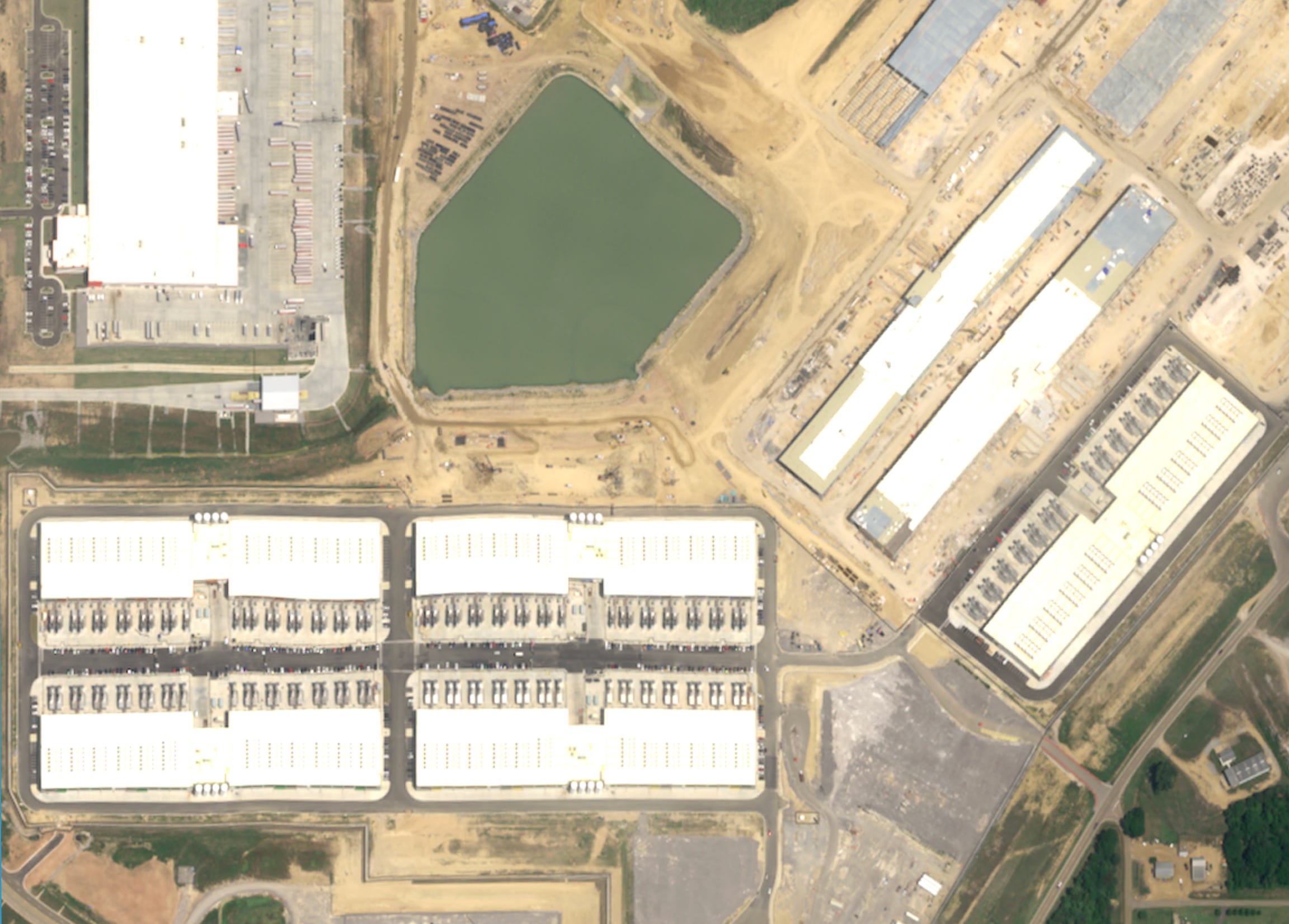
Ultimately we found three new gas plants under development that will serve Amazon’s Mississippi campuses. Entergy didn’t have to file permits with state regulators, but they did have to mention it to investors in SEC filings, which created a paper trail we could follow further.
We learned that Entergy is investing $3.4 billion to build 2.3 GW of new gas generation capacity to serve Amazon’s new load. The utility also plans to build 270 MW of new solar generation.
This unorthodox deal structure and special session bill enabled what Amazon, and every hyperscaler crave most: speed. A year ago, Amazon didn’t have a single data center operating in Mississippi. By the end of next year, the state will house one of the company’s largest compute clusters.
Get the full report
These are just a few of the many takeaways from our comprehensive analysis of Amazon’s data center power strategy. Here’s what’s inside the full report:
Data file covering 825 US Amazon data centers across 149 campuses, including the exact location, power capacity, square footage, status, and operating year.
Amazon’s operating, under construction and planned capacity by state
A breakdown of Amazon’s contracted power by energy type
The 8 gas plants that will power Amazon’s future data centers
How Amazon contracts with clean energy developers
Case studies on Amazon’s power strategy in Virginia, Ohio, Oregon, Indiana, and Texas
How Amazon built the largest data center in the world without building any new power plants
The transmission lines that could make or break Amazon’s data center plans
You can purchase the full report, download a free preview, or learn more about our research subscriptions by clicking the button below.
I am consistently blown away at how fantastic and groundbreaking your research is