

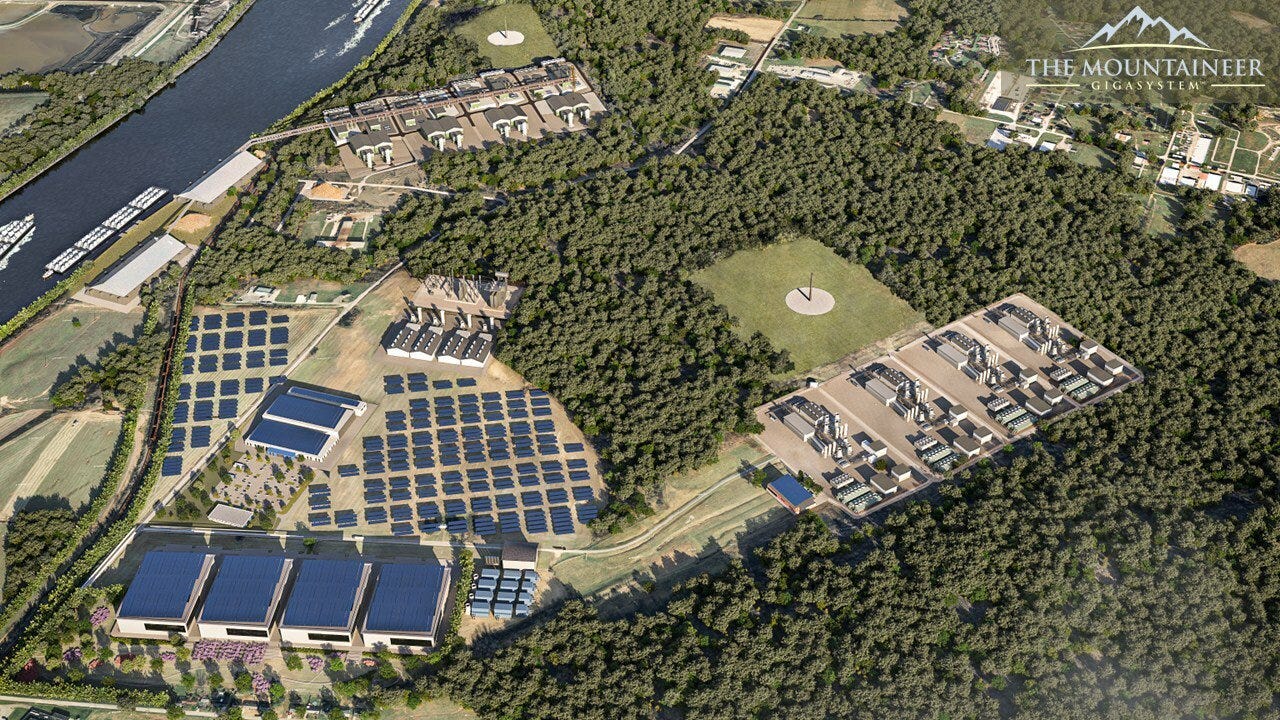
Microsoft just announced that it will deploy 1.35 GW of Nvidia’s latest chips at an off-grid data center in West Virginia that will run on 100% natural gas. The massive deployment could boost the company’s data center emissions by 40% based on my estimates.
In Cleanview’s latest report, we identified 46 data center developers that were planning to build their own power plants. One of the strangest projects we came across was Monarch Compute Campus, an 8 GW project in West Virginia.
The company behind the project had never built a data center and had no tenant disclosed. Yet we found a 2 GW order for Caterpillar generators to power the first phase. I didn’t know what to make of it.
Yesterday, Nscale—a neocloud backed by Nvidia—announced it has acquired the Monarch project and signed a deal with Microsoft to deploy 1.35 GW of Nvidia’s Vera Rubin NVL72 GPUs.
Nscale says it plans to bring the first 2 GW of its project online by 2028. It wants to build 8 GW of capacity by 2031.
Before working on our behind-the-meter data center report, I would have been skeptical of this timeline. But in that research, we learned that developers are getting around grid delays and turbine shortages by purchasing equipment like the Caterpillar gensets Monarch will use.
It’s difficult to overstate the scale of this project. 8 GW is a bit less than the entire peak power demand of New York City.
That scale will come with major environmental impacts. Microsoft’s 1.35 GW deployment could result in 3.9 million tons of CO2 emissions per year by my estimate1. Last year, the company’s entire fleet of data centers emitted about 10 million tons. So this deployment would boost emissions by 40%.2
If the project scales to 8 GW, it could emit 23 million tons per year. That would represent about 35% of the entire coal-heavy state’s emissions.3
In our report, we found 45 more data center projects like this that would add a combined 56 GW of capacity. 90% of those projects were announced last year. With Microsoft getting in on the action, I wouldn’t be surprised if that number continues to climb this year.
Read more about behind-the-meter data centers
To read the full behind-the-meter report that featured the Monarch Compute Campus, you can head to Cleanview’s website. We’ve released both a free summary and a ~50-page paid version with two datasets. We also have a discounted option for nonprofits and researchers.
Here are the assumptions I used:
Electrical efficiency: 44.6%
Heat rate: 7,670 BTU/kWh
CO2 intensity: 407 kg CO₂/MWh
Capacity factor: 80%
What is the problem with more plant food in the air?
Build data centers next to coal power plants!
Drive renewal in depressed.coal districts!
would be good to call this fossil gas vs natural gas and call out the impacts of methane on climate change as well since while it burns cleaner than coal we know there are lots of leaks as it's extracted and transported.