

A quick note: As I wrote in my annual update, I’m going to be writing about more topics than climate change and clean energy going forward. This newsletter has always touched on politics, economics, technology and much else. This year, I plan to do so more directly by expanding the breadth of coverage.
When I think of whose jobs are most threatened by AI, I tend to think of low-income earners. AI, and automation more broadly, are already displacing call center workers, cashiers, and ride-share drivers.
That’s why this chart from a recent Wharton Budget Model study surprised me. It shows that some of the highest income earners are at most risk, while the lowest income earners are safest.
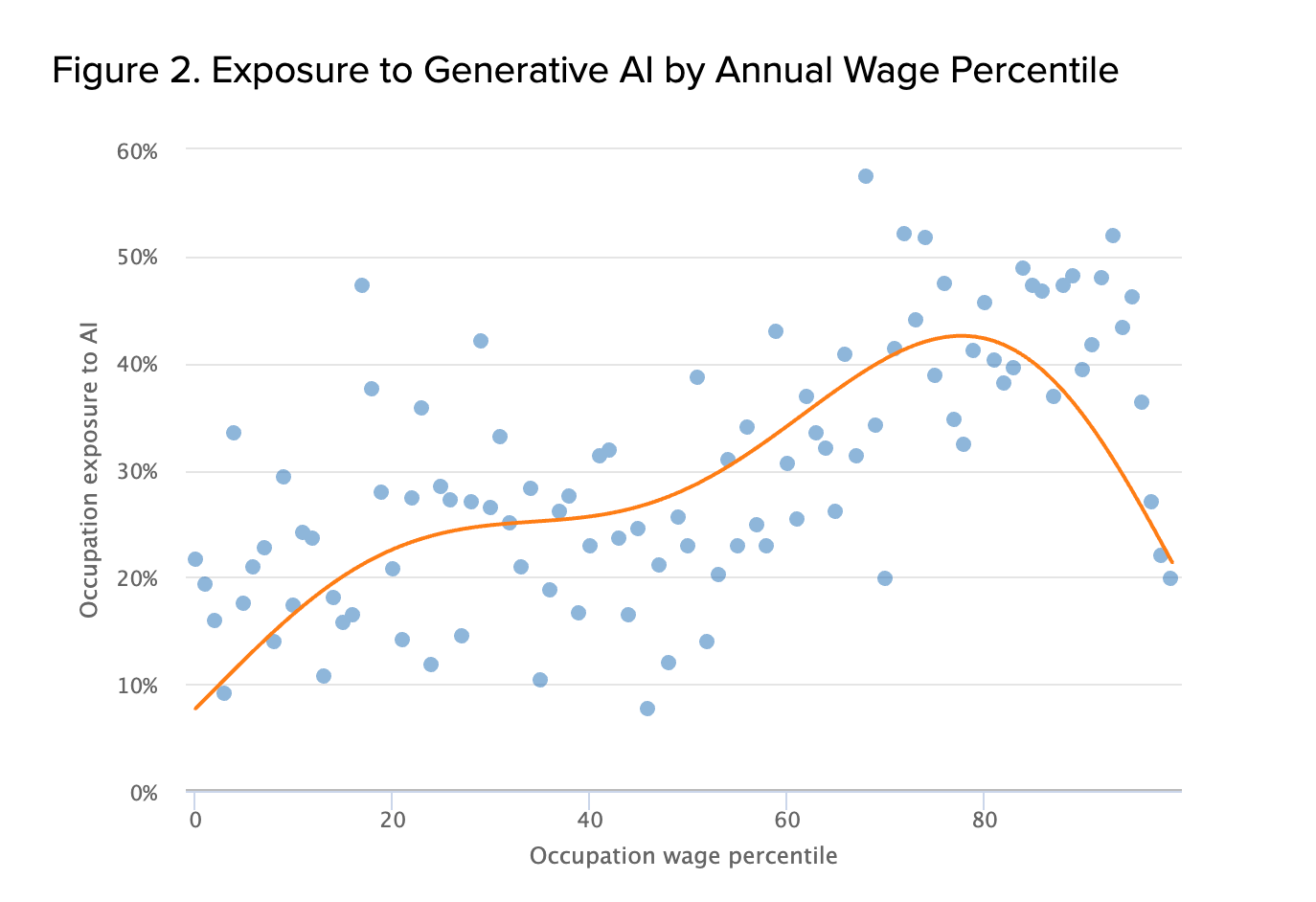
As the authors of the study write, “Occupations at the bottom of the wage distribution are the least exposed to AI, since many of these jobs are predominantly manual labor or personal services. Exposure generally rises with earnings until the 80th-90th percentiles, which include programmers, engineers, and other professionals.”
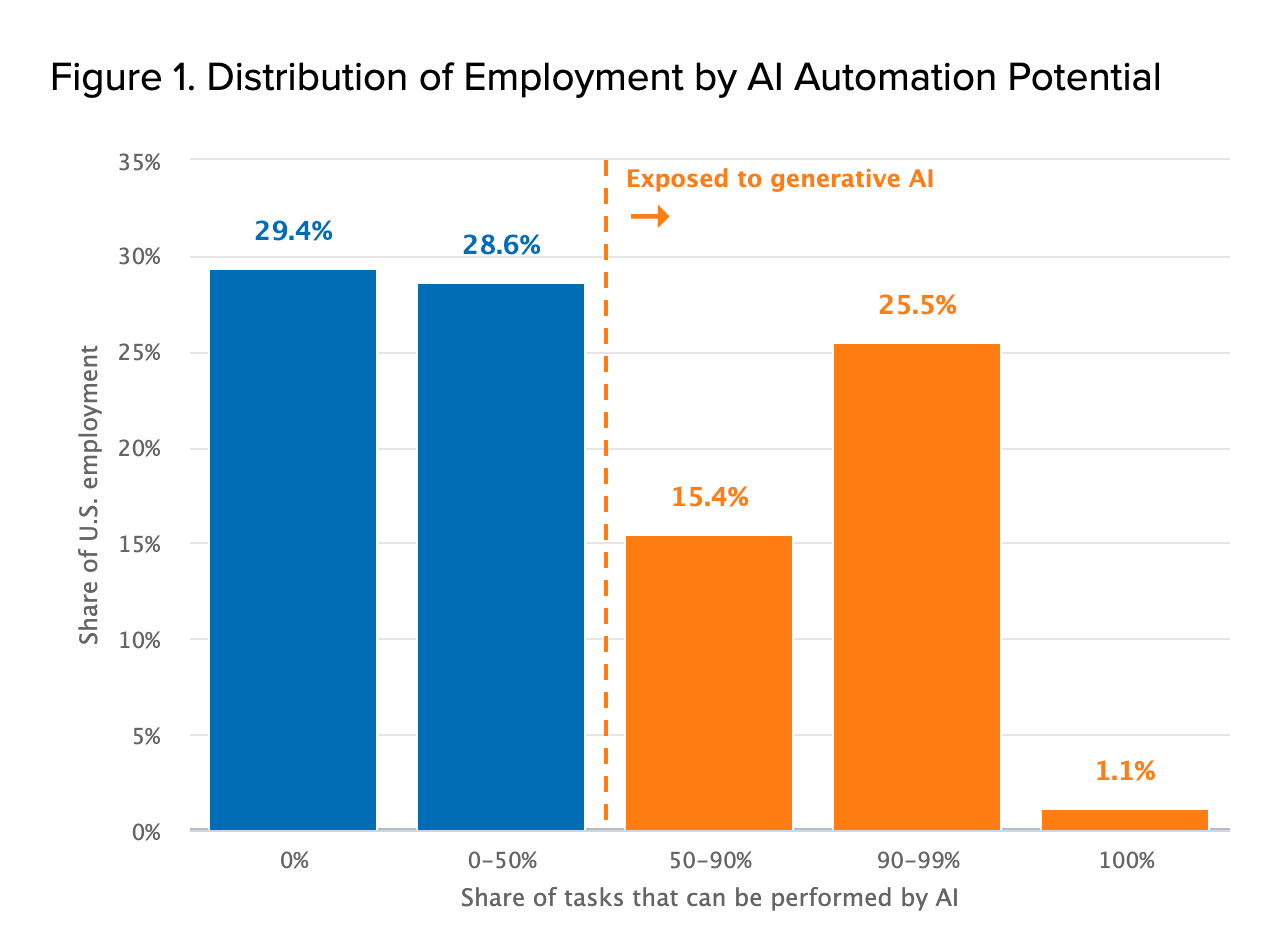
The study argues that half of the work of these high income earners can be done by AI today. The researchers found that in more than a quarter of US employment, AI can perform between 90 and 99 percent of the work required with minimal oversight.
I know many readers will find these numbers absurd. Google’s AI overviews struggle to answer basic questions like “What year is it?” ChatGPT only recently figured out how to count the number of r’s in the word strawberry.
But I think the estimates in this study actually understate the potential labor disruption.
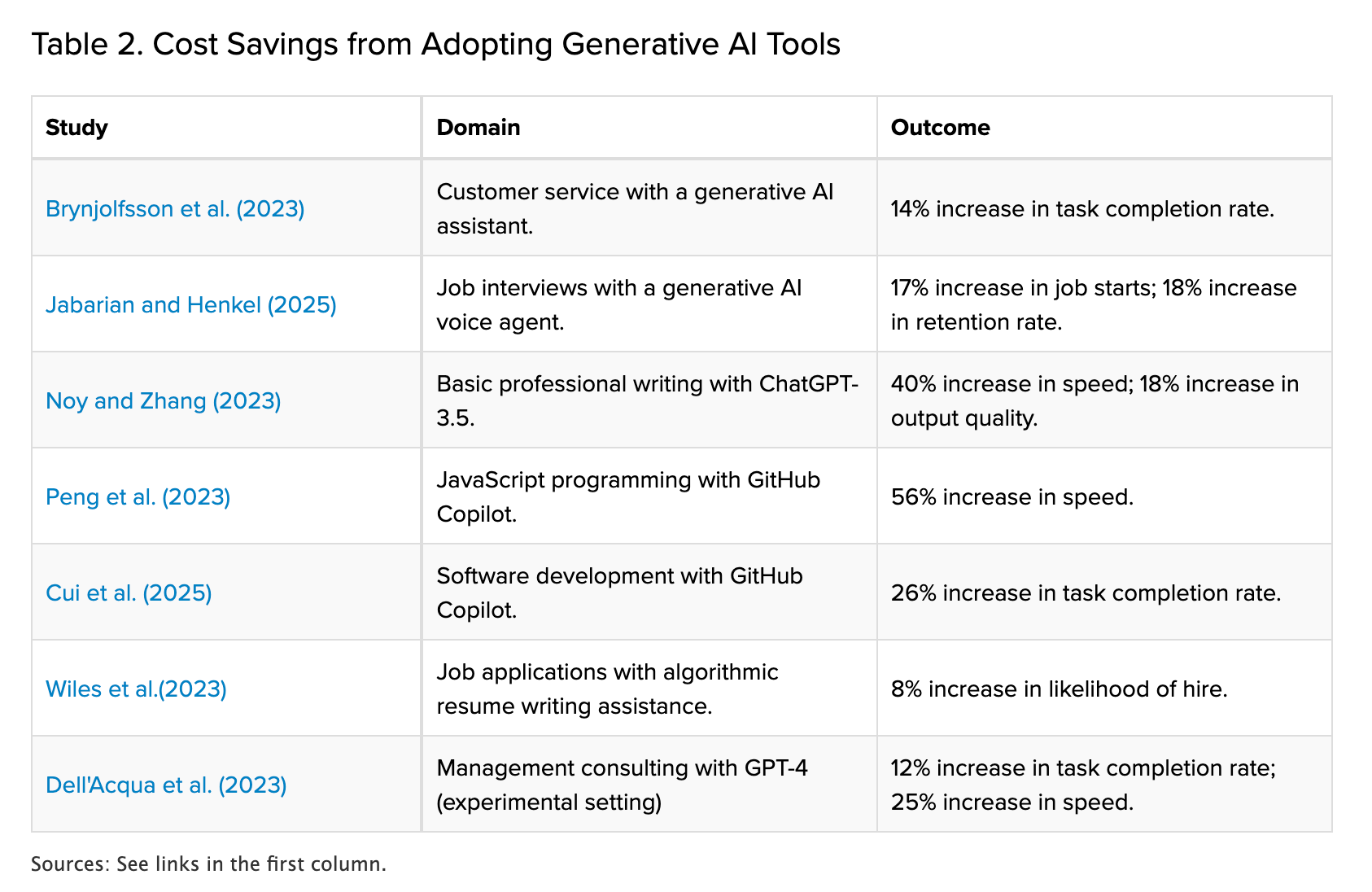
If you look at the research this study used to estimate AI’s capabilities, you’ll notice many used old models like ChatGPT 3.5 and 4 and Github’s Copilot (circa 2023). Most studies on the same topic use the same underlying research.
These tools were primitive compared to today’s models, though. They didn’t have web search access, reasoning capabilities, or access to every file on your computer like today’s paid models do.
I’ve been thinking about all of this as I’ve been using Claude Code in my own work at my company Cleanview. It is consistently doing tasks in hours that used to take me days. It built most of our free project explorer that I shared on this newsletter last month. That project took Claude a couple hours. A similar project took me two weeks a year ago.
I always hesitate to write about my own experiences with these tools. I find that I have an almost allergic reaction to stories like the one I just shared given that so many come from AI hype bros that don’t share many of my values or concerns for the impact of these tools on society and our planet.
But I’ve noticed that many people who don’t use these tools—often out of moral disgust with the way they were illegally trained on creatives’ work, or their environmental impacts, or their potential to enrich billionaires—are overlooking or underestimating their true capabilities.
I see many people online cite the viral MIT study that tanked the stock market temporarily last year as evidence that these tools aren’t capable. That study found that “95% of AI pilots at companies fail.” But that was one study with a small sample size. Many other studies have found AI offers huge productivity gains and is increasingly able to replace jobs.
The way some people dismiss AI’s current capabilities worries me because many of these critics have influence and power that could shape the trajectory of all this. If you don’t believe these tools can displace tens of millions of workers, why think about policies that could protect or support them?
For much of the last three years, I’ve oscillated between thinking that AI is transformative to believing that it’s mostly overhyped. At times, I’ve felt frustrated that I can’t land on a single position. But more recently, I’ve come to embrace that ambiguity and uncertainty.
In a world that is complex and fast-changing, the alternative feels absurd.
What I’ve been reading
I’ve been reading a lot about AI’s potential impact on labor markets recently. I’ve really enjoyed these two books:
A World Without Work: Technology, Automation, and How We Should Respond
The Technology Trap: Capital, Labor, and Power in the Age of Automation
If you’re looking for an entry point into the topic, as I was, I recommend starting with the first one. If you want a wonky, long-sweeping history of automation, start with the second.
If you’ve read any good books or articles on this topic, I’d love to hear about them. Please send them my way.


Michael, enjoyed the post, thank you.
You asked about other interesting reads on work and automation. Here are two I highly recommend.
1. Intelligence Curse: well thought out take on how automation of cognitive work affects power distribution in society.
https://intelligence-curse.ai/
2. Blood in the Machine: very readable account of the Luddite rebellion in early Industrial Revolution. Lots of parallels to inform your sense of how different players are likely to act.
https://a.co/d/09kXPvA