

The tl;dr update
This newsletter recently turned 3 years old. To everyone who has read my work—and especially to paid subscribers who have supported it financially—thank you. Your support and kind words over the years have meant the world to me.
We’ve made a big impact together. In 3 years, these stories have reached tens of millions of people. According to a literal academic study on Distilled’s work, these stories change people’s mind and makes them more open to sustainable solutions. This summer, a Distilled analysis was used on the floor of the US Senate.
Going forward, I’m going to be writing about more topics than climate change and clean energy. This newsletter has always touched on politics, economics, technology and much else. Beginning in 2026, I plan to do so more directly by expanding the breadth of coverage.
I’m going to publish more short posts in between my longer stories. These stories will be more visual and quicker to read. You can read the first one here.
The longer version
A personal highlight from 2025
When I started Distilled, I set a goal for myself that felt ambitious at the time: Produce work that influences how Congress writes clean energy policy. This year, that goal became a reality.
This summer, Trump and Congress set out to dismantle many of the clean energy policies originally passed in the Inflation Reduction Act. The first version of the bill passed by the House in May was bad. It aimed to phase out clean energy tax credits within months. But all the pundits believed that the “cooler heads” of the Senate would pass a better bill. They were wrong.
One Saturday morning in June, I woke up and saw that the Senate released their version of the big bill. I woke up and quickly read through the energy provisions. It was immediately clear that the bill would be even more disastrous than the House version.
The bill threatened to cut off America’s fastest-growing sources of electricity—solar and wind—at a time when the country was desperately in need of new power. In addition to removing tax credits, it actually created a new tax on solar and wind projects.
Over the last two years, I’ve been building a dataset of ~10,000 planned clean energy projects through my company Cleanview. That work enabled me to quickly run an analysis to see how many of these projects would be at risk if the bill passed.
The number was staggering. Republicans’ poorly designed policy threatened a wave of energy project cancellations, hundreds of billions in lost investment, and electric grid blackouts by the end of the decade.
I quickly wrote all of this up and by 10am that morning I published the results to this newsletter and on social media. Then I started texting everyone I knew who had any connections to Congress. Within 30 minutes I got connected to a Congressional staffer, who then connected me to three Senators’ energy policy advisors. These folks used the analysis as part of a much larger effort to lobby moderate Senators.
Later that day, I went to lunch with a friend. Halfway through lunch my phone started buzzing with text messages. Elon Musk had shared my analysis on Twitter, writing, “This would be incredibly destructive to America!”


That was enough to boost it to the top trending news posts on Twitter for most of the day. The New York Times then published a story at the top of their home page about how Elon Musk had come out against the bill citing my post and another from Princeton’s Jesse Jenkins.
The next day, Sen. Brian Schatz (Hawaii) used the data in his floor speech arguing against the bill. The staffers that I spoke to told me that they used it in conversations with moderate Republicans.
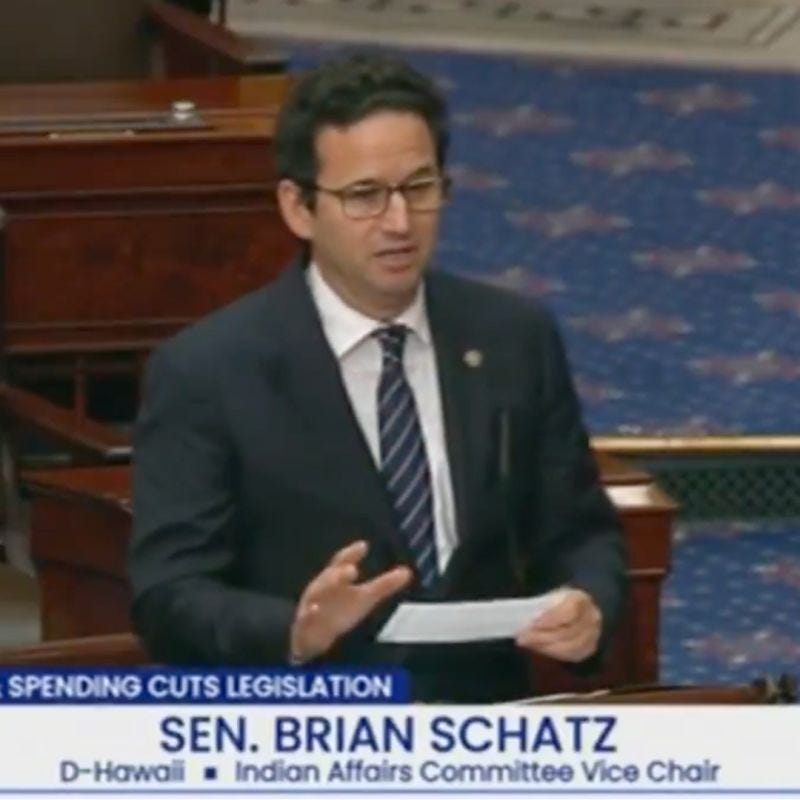
Ultimately, some of the worst clean energy provisions of the bill—including a new tax on solar and wind farms—were taken out. Modeling from Princeton shows that those last minute changes will be enough to cut 65 millions of CO2 emissions every year compared to the initial version.
That small win was without a doubt the result of work by hundreds of people, including the public servants in Congress who stayed up all night fighting to make a very bad bill a little less bad. Playing a small role in that effort was one of the highlights of my career.
I’m learning to trust in the process more
As I shared in a post from earlier this year, I’ve always doubted the impact that newsletters and social media posts can really make in the world. But between these moments of doubt, has come proof that stories do matter.
One entrepreneur, who left his job at Google and eventually raised $33 million to build a better heat pump, told me that one of my stories encouraged him to start looking into heat pumps in the first place. A Congresswoman told me that my story encouraged her to launch an investigation into a company spreading disinformation online. Countless others reached out to tell me about the action they were taking in their homes and in their communities.
Over time, I’ve come to trust in the unpredictable process of all this more. And I’ve come to see my work as something like an extended and asynchronous conversation with the world around me—one from which I can learn and then share what I learn with others.
Where I want to take this newsletter going forward
Since starting this newsletter, I’ve always planned to write about more than climate change and clean energy. Gradually over the coming months, I plan to do that.
The main reason that I want to write about more topics is simple: I’m endlessly curious about the world around me. I love learning and this newsletter is first and foremost an excuse for me to learn.
The second reason is a bit more abstract. Ever since the 2024 election, I’ve had this nagging feeling that what I write is largely reaching the wrong audience. Positioning this as a climate newsletter has attracted wonderful people committed to making the world better—many of whom I’ve had the pleasure to meet. But it tends to attract the “die-hards” who have generally already made up their mind about climate change and clean energy.
I’m not naive enough to think that my writing is ever going to appeal to people who think climate change is some great hoax. Studies on changing people’s minds who have been swayed by disinformation are pretty bleak. But one thing those studies tend to suggest is that the most effect way to combat misinformation is by “pre-bunking” myths and basically inoculating people to the disease that is bullshit.
My hope is that writing a newsletter that is wider in focus will help me reach a broader audience who might not have already made up their mind about the topics I write about. And because I think persuasion is a two-way street, I hope to learn from this broader audience, to have my own mind changed and opened to more ideas and worldviews.
What I’m planning to write about
I’d love to share exactly what I plan to write about in 2026, but the truth is that I’ve never been good at planning more than a month in advance. I’ve created many editorial calendars over the years and I’ve stuck to exactly zero of them. But here’s some of what I’ve been thinking about:
I want to explore how we can make the essential things in society more affordable and sustainable—energy, housing, healthcare, childcare. These are the costs that squeeze families and shape elections. My hope is to explore this from a non-dogmatic and nuanced perspective as I did in my story, “Be Careful of the Lessons You Learn In Texas.”
I’ve also become much more interested in technology since starting this newsletter. Many of the stories that I’ve written have required me to learn about the history of various technologies like solar, wind, and batteries. I don’t think new inventions and innovation can solve every problem, but they can certainly help.
One major subcategory of technology that I plan to write about is artificial intelligence. I’ve written stories about the environmental costs of AI and the degree to which data centers are and aren’t raising electricity prices. I plan to continue this coverage, but also expand into other topics like the impact of AI on society more broadly. As an example, I’m currently working on a story about how AI will impact labor markets.
I should say that my writing about AI will likely diverge from other climate-focused and liberal writers. I’m concerned about the harms associated with AI. But I’m much more optimistic than many of my friends and fellow writers about the technology. I think with the right policies AI can bring massive benefits to all of us. I suspect this perspective will be frustrating to some readers who strongly dislike AI. I hope I can bring you a different perspective and also learn from yours.
Finally, I plan to continue to write about politics and policy—with a primary focus on the US. I think few events will carry more consequence for Americans and the world than the midterm elections. So I plan to write about the debates and issues in the run up to that election.
Thank you
To everyone who has read this newsletter over the years and supported my work, thank you. As always, you can say hello, share what’s on your mind, or suggest story topics and ideas by responding to this email or commenting below.
Lastly, if you aren’t interested in following this next phase of Distilled, I totally understand. I won’t be offended if you unsubscribe. And if you are a paid subscriber and want to cancel or want a refund on your annual subscription, just reply to this email. Regardless, I appreciate your support up until now.
Happy New Year!
- Michael
Congratulations on the success of your work, and glad that you'll be expanding it. Don't let the broadening interfere with your main strength, that is, solid journalism with extensive research and analysis in depth. That's increasingly rare and necessary. Best wishes for 2026, so much to do!
Bravo!