

This is the 6th edition of a new format I’m trying out on the Distilled newsletter. As I explained in the first edition, my plan is to share stories, charts, and interesting stuff I find while doing research for my longer stories.
Here’s what’s in today’s newsletter:
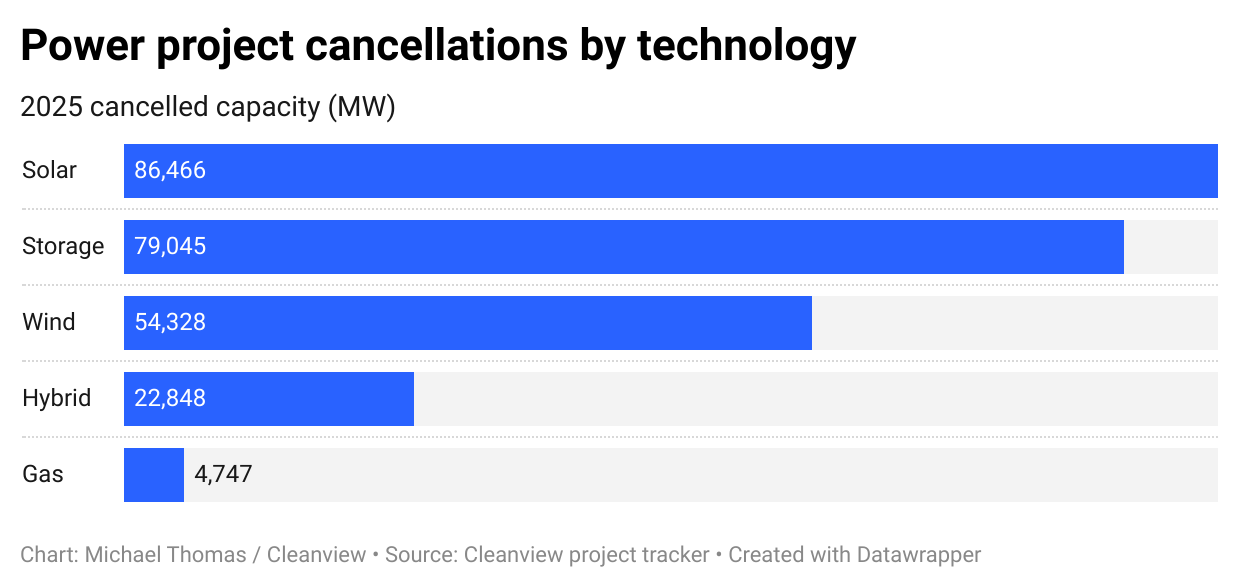
Developers have canceled 1,891 power projects this year with a combined capacity of 266 GW, with clean energy accounting for 93% of cancellations.
Why Trump’s plan for AI dominance requires renewables
18,000 reasons that it is so hard to build semiconductor fabs and wind farms in America
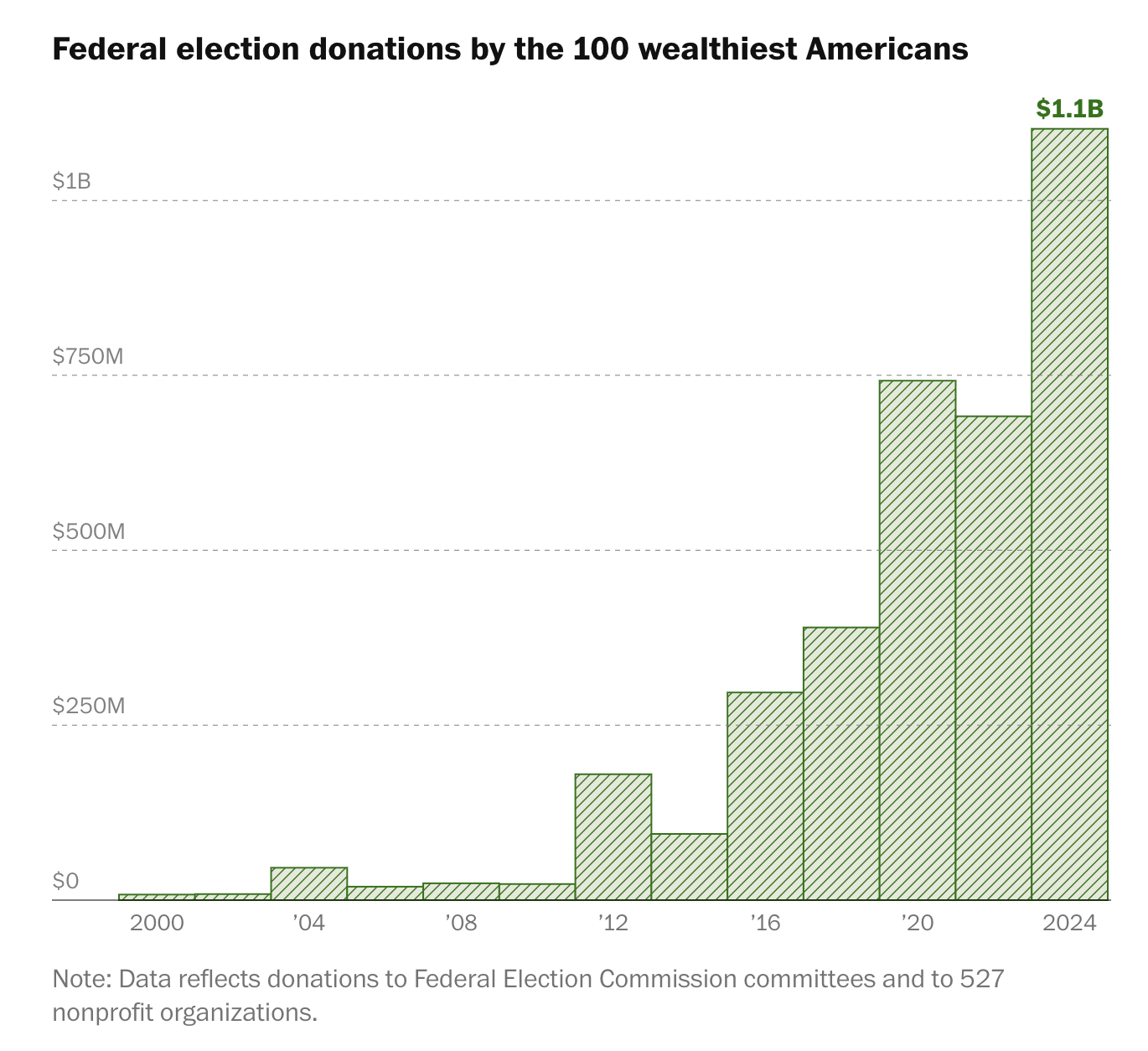
Trump raised 15 times as much from the 100 richest Americans in 2024 than he did during his first presidential campaign, in 2016.
How OpenAI’s latest data center is skirting zero-carbon electricity requirements in New Mexico and how it could save $132 million per year with solar power
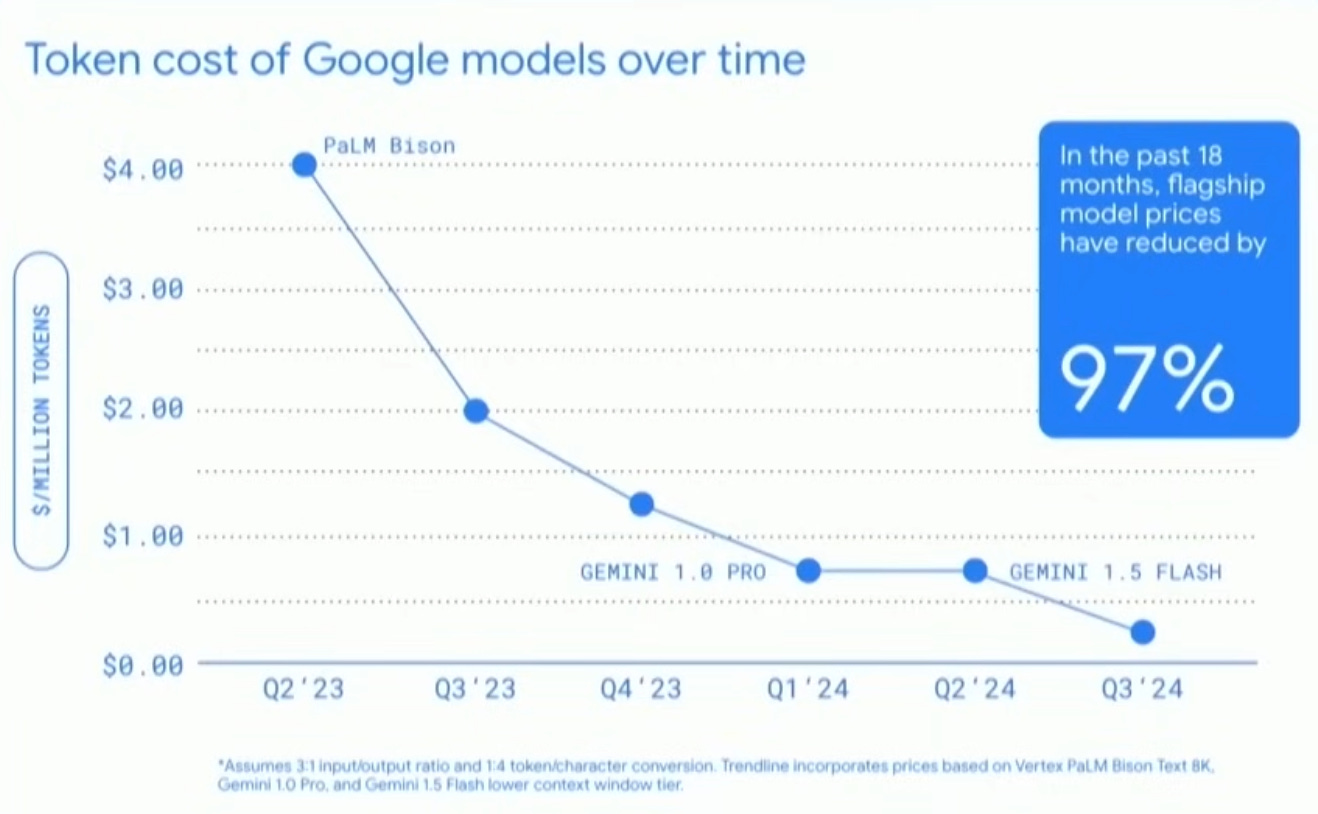
AI is getting cheaper, very fast. The cost of Google’s flagship AI models have fallen by 97% in the last 18 months.
Developers have canceled 1,891 power projects this year
I spent most of this summer telling anyone who would listen to me that Trump’s energy policies posed huge risks to our country’s economy and power grid. I wrote more than 50 posts—some of which were cited on the floor of the US Senate and shared by Elon Musk. I talked to countless reporters across the country. And I dedicated most of my writing on this newsletter to the topic.
The gist of my argument was this: Trump’s policies would force many developers and investors to cancel their projects leaving the US with an electricity shortfall in a few years. Tariffs would raise prices too quickly and introduce uncertainty; illegally canceling funding and forcing wind developers to stop construction would create a chilling effect; and phasing out clean energy tax credits would kill thousands of projects.
Over the last few weeks, I’ve been analyzing data to check in on the state of many of these at-risk energy projects. I found that 1,891 power projects with a combined 266 GW of generation capacity have been canceled in 2025—equivalent to roughly one-quarter of America’s entire current electricity generation capacity.
Clean energy projects have been hit hardest, accounting for 93% of project cancellations in 2025. Utility-scale solar alone saw 86 GW canceled, while battery storage projects lost 79 GW and wind projects shed 54 GW.
The Trump administration and their chaotic policies were responsible for many of these project cancelations. But the analysis showed that there’s much more causing project cancelations and preventing the buildout of clean energy than federal policy. Tomorrow I’m planning to publish the full results of the analysis in a report for Cleanview. I’ll share it with Distilled readers here.
I shared an early preview of the report with about a dozen reporters. If you’re a journalist and want me to send you a preview before publication, you can respond to this email or get in touch here.
Trump’s plan for AI dominance requires renewables
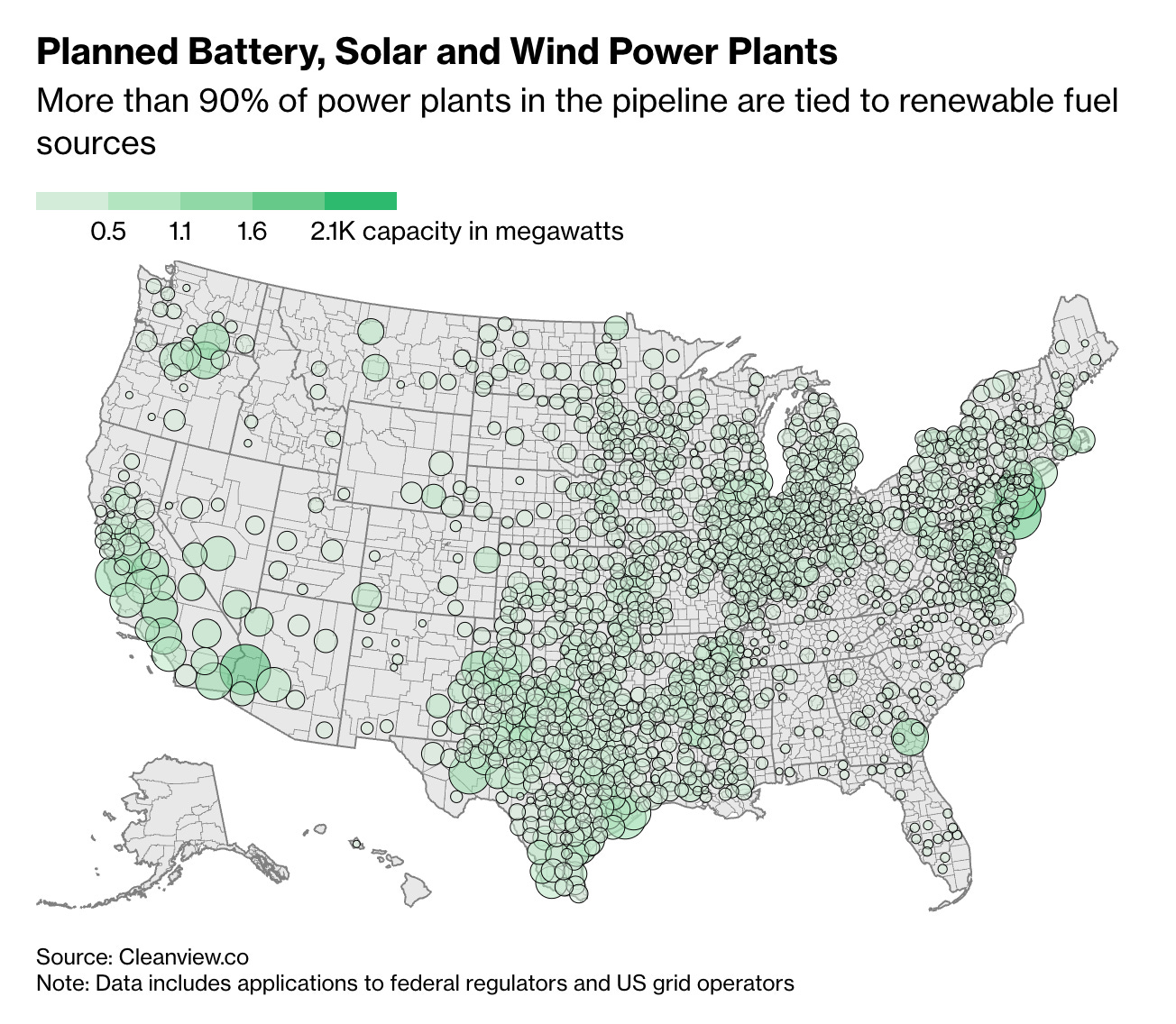
On a related note, Bloomberg published a story this week showing that Trump’s plan for AI dominance is threatened by his own attacks on solar and wind power:
The Trump administration is moving to fast-track the construction of power-hungry data centers as a matter of national security. At the same time, it’s adding roadblocks for new solar and wind farms.
But the two policies could be at odds: Hindering renewable energy projects risks slowing the AI boom — and could exacerbate rising electricity prices, a slew of data suggests.
For this story, Bloomberg used Cleanview’s data to show the risks that Trump’s anti-renewable policies pose to the US power grid. As they write:
Renewable energy so far remains the fastest and cheapest option to add power to the grid. Nearly 80% of the planned power plant capacity in the pipeline is tied to renewable sources
18,000 reasons it’s so hard to build a chip factory in America
One of the Biden administration’s signature achievements was passing the CHIPS Act, which convinced companies like TSMC to build semiconductors in the US instead of countries in Asia like Taiwan. But these companies are learning why it's so difficult to build large infrastructure projects in America.
Per The New York Times:
In Taiwan, TSMC and its suppliers build facilities in dedicated industrial zones that generally require one permit from a central authority. In Arizona, they must negotiate municipal, county, state and federal regulations, requiring thousands of approvals.
TSMC has said that building fabs in the US takes twice as long as it does in Taiwan. Once the factory is complete, manufacturing chips is then 50% more expensive.
The company was required to gain permits from city and county authorities to comply with state and federal regulations. In many instances, regulations for its industry did not exist at the local level, so TSMC had to convene a team of experts to craft its own language and gain approvals.
“We ended up establishing 18,000 rules, which cost us $35 million,” Mr. Wei said.
Many permitting processes are designed with good intentions. They prevent companies from polluting the local air and water, killing endangered species, and harming people in surrounding communities. But many of them are Kafkaesque.
Linde, a company that pumps pristine air into TSMC fabs, erected a plant next door to the factories, including a $45 million pipeline. Linde needed 150 permits for the pipeline alone, Mr. Planck said. A permit was required to pile extra dirt left from grading the site. Each permit entailed as many as 15 inspections.
The same permitting labyrinths are slowing the energy transition. Earlier this year, I wrote about a wind project in California that has been under development since George Bush was president.
In 2004, Iberdola, Tule Wind’s developer, submitted an interconnection request and began the process of development. Because the project was set to be located on both state and federal land, it required both a NEPA and CEQA environmental impact report. Those took two years. After the state and federal government issued their reports, the county of San Diego had to issue its own report. Then, after that, the state’s public utility commission had to approve the power purchase agreement between the developer and the state’s utility. And then, finally, the State Lands Commission, which controlled a small strip needed for phase two of the project had to weigh in. By this point, it was 2016—12 years after the project was first proposed. But the real saga was only just getting started.
Each state review and decision opened up a new opportunity for litigation from any member of the public. In 2014, a local group began launching a series of lawsuits targeting the project. At first they claimed that the electromagnetic frequency (EMF) from the wind turbines would cause cancer. When that didn’t work, they argued that the turbines would kill eagles. Their lawsuits were ultimately unsuccessful at stopping the project, but they added years to the development timeline.
20 years later, the second phase of the project is still not complete. It’s expected to come online in December 2027.
Again, it’s good that large infrastructure projects are regulated. But the permitting process shouldn’t be this difficult—especially for critical projects that would make our world better like wind farms.
Political donations by billionaires
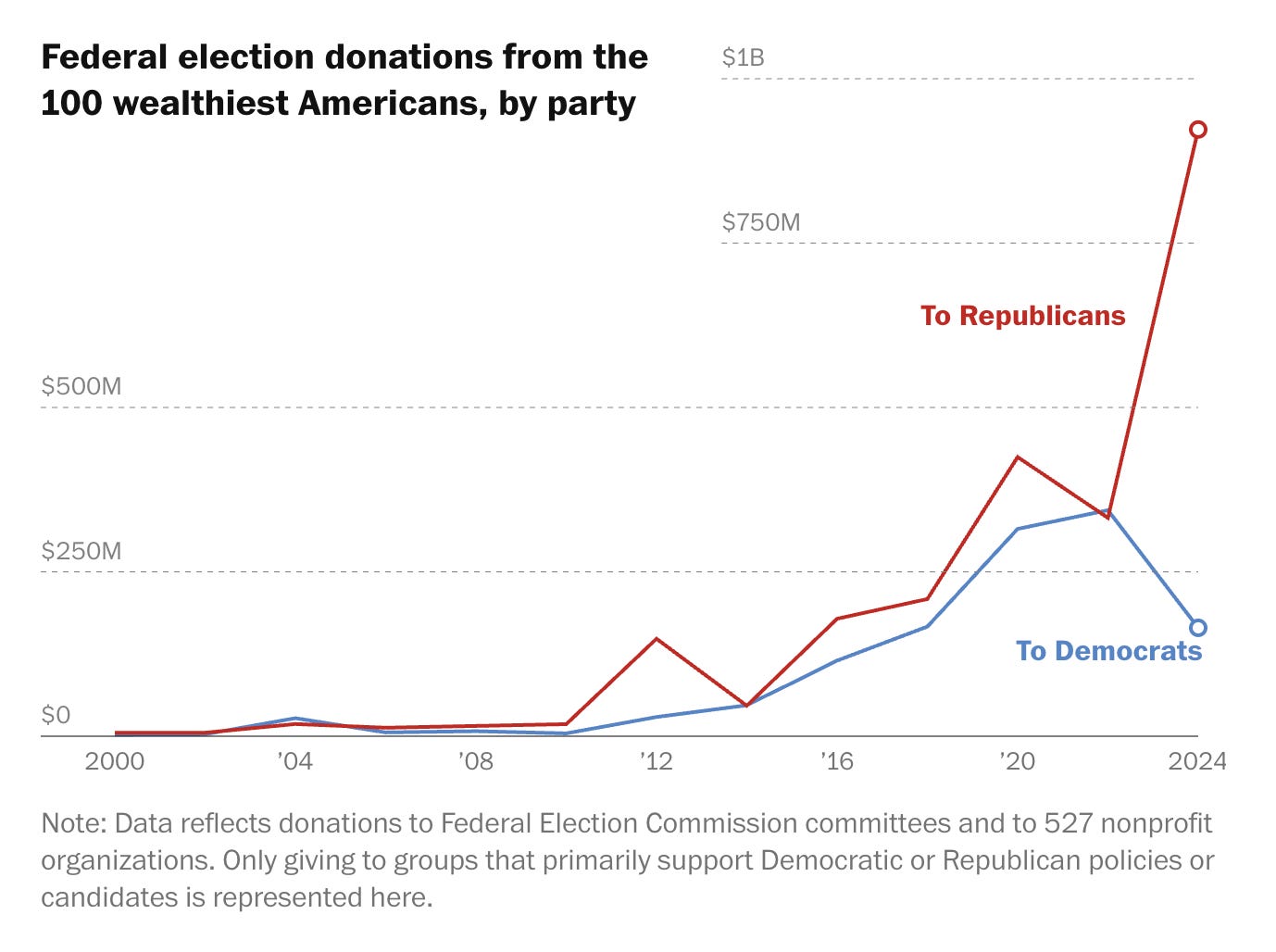
Per The Washington Post:
Overall, billionaires have rallied behind Trump’s Republican Party. More than 80 percent of the federal campaign spending by the 100 wealthiest Americans in 2024 went to Republicans, The Post found. Trump himself raised 15 times as much from the 100 richest Americans in 2024 than he did during his first presidential campaign, in 2016.
Why isn’t this data center using solar?
OpenAI and Oracle recently announced plans to build a massive data center in New Mexico called Project Jupiter. The project’s developers convinced the New Mexico legislature to create a loophole allowing them to avoid the state’s 2045 zero-carbon electricity mandate by building a “microgrid.” Rather than connect to the grid, they plan to build a 900 MW gas power plant.
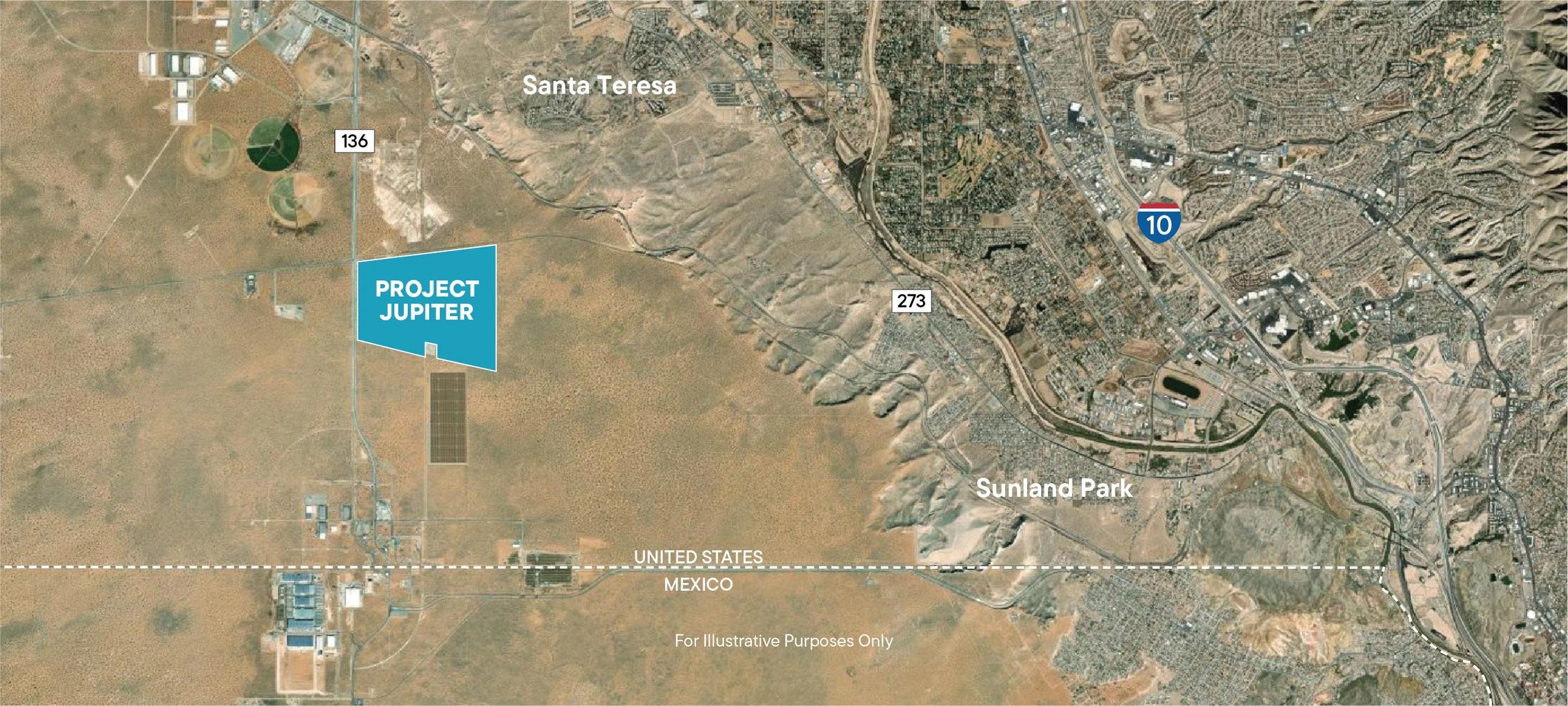
But the project is located in one of the sunniest parts of the country and could immediately power 40% of its operations with nearby solar, according to an analysis by Ember’s Dave Jones and Kostantsa Rangelova. That would save $132 million per year and prevent 1.5 million tons of unnecessary emissions.
AI is getting cheaper—fast
One of the things I’ve learned writing about clean energy is the importance of learning curves. Forecasters failed to anticipate the clean energy revolution, in part, because they didn’t expect costs to fall so quickly.
Like solar, wind, and batteries, AI is on a learning curve. It’s easy to miss this given the insane amounts that companies are spending on AI infrastructure. But you can see it clearly in the data. The cost of Google’s flagship models have fallen by 97% in the last 18 months.
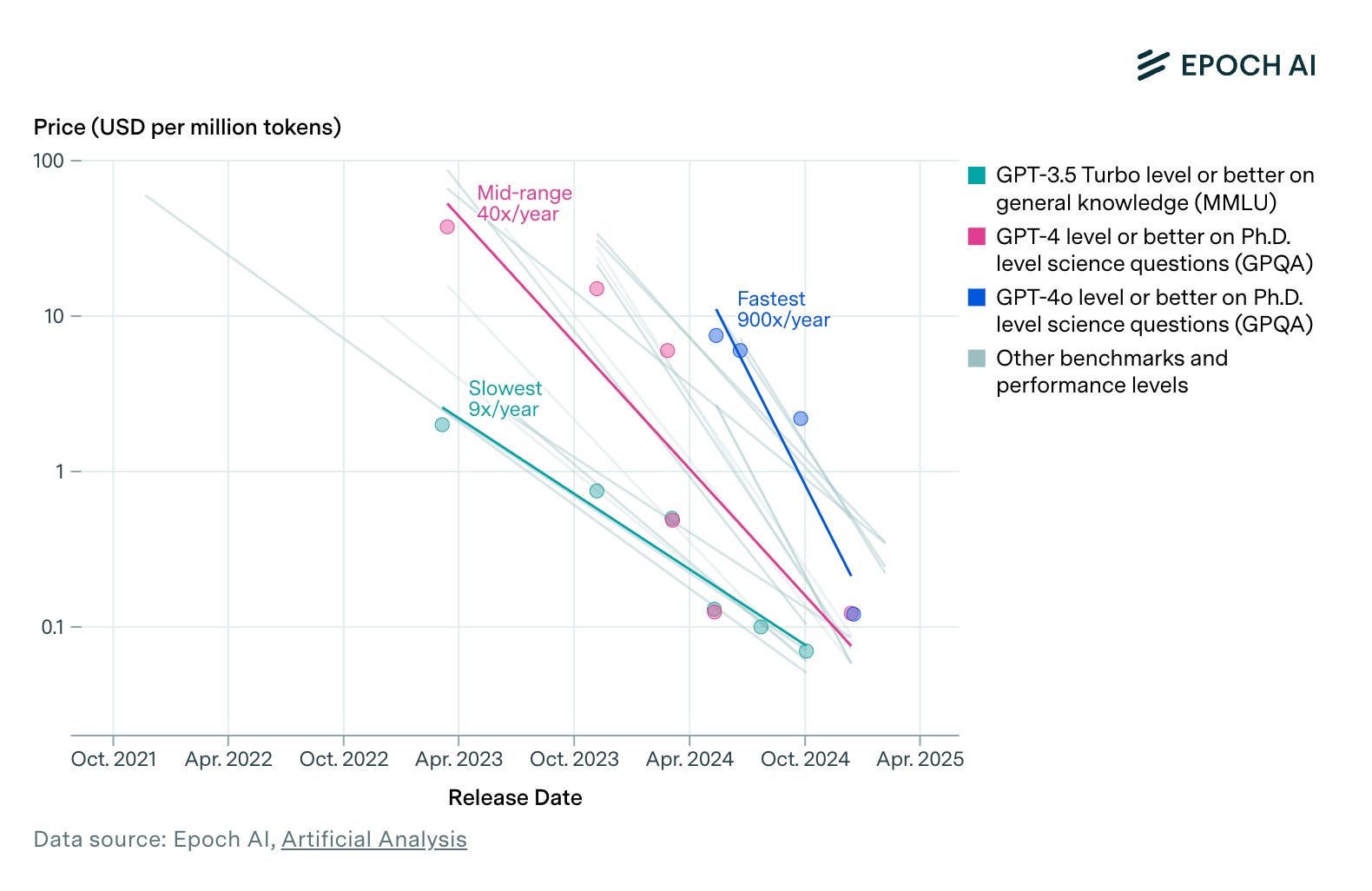
The same trend holds across virtually every AI lab and model. As Epoch AI writes:
The price to achieve GPT-4’s performance on a set of PhD-level science questions fell by 40x per year. The rate of decline varies dramatically depending on the performance milestone, ranging from 9x to 900x per year.
I worry that many AI skeptics are missing this fact and making the same mistake that renewable skeptics made a decade ago, underestimating the trajectory of the technology and its impacts on society.
More weekly briefings
I hope you’ve enjoyed reading the first six editions of this new format as much as I’ve enjoyed writing them. You can read the first five editions below. And if you aren’t already a paid subscriber, you can sign up here:


Very interesting and encouraging note about the lowering cost of AI queries.
But AI costs are of two types: the training phase (creation of the model) and the inference (question-answering) phase. The training phase has been getting more expensive as models get more complex and developers increase training runs to try to make the models more accurate. An analysis of the total cost of AI would need to look at both costs and their trends. Maybe the training, which is extremely expensive but only happens once, isn't as big a factor - but that needs to be checked.
What is it with today's billionaires? Yikes.